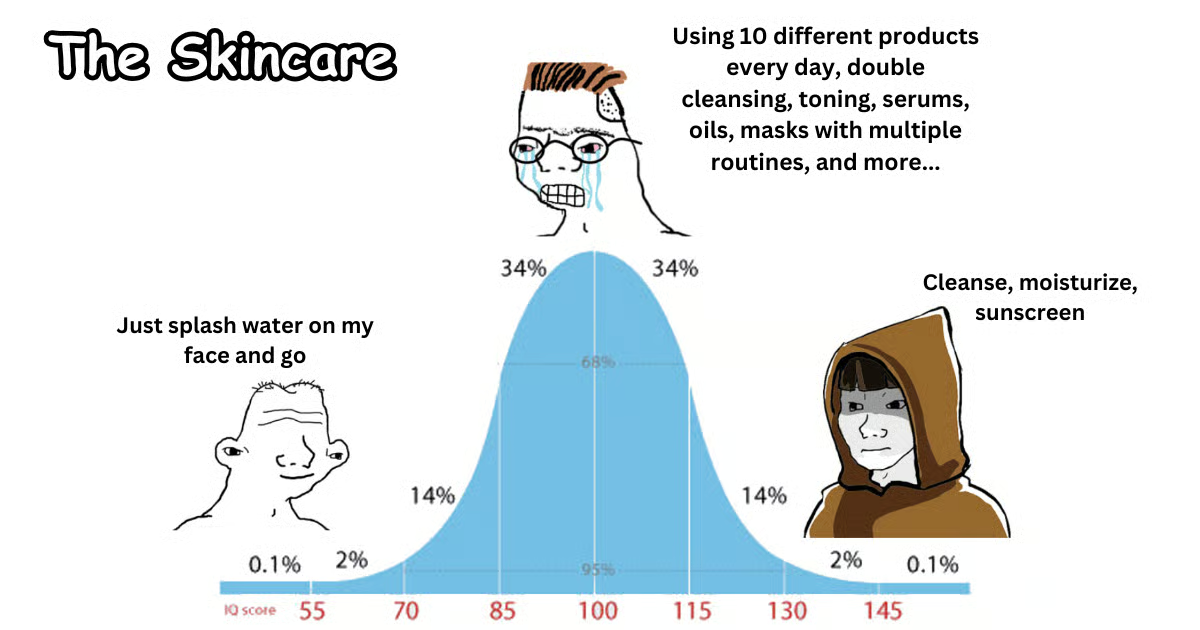
Every day, over 100 hours of skincare content are published online The total worth of the skincare industry is $184 billion They keep uploading new content But most are the same Just repackaged
TL;DR
It may feel like a chemistry class because of too many chemical names.
Don’t worry follow the simple trick:
“Select the products → compare with the list below → buy”
Pro Tip: Do a patch test, before using it fully to avoid reactions.
Products: Cleanser, Moisturizer, Sunscreen, Retinol.
Daily routines:
• Day: Cleanser → Moisturize → Sunscreen
• Night: Cleanser → Retinoid & Moisturizer
Websites (To check about ingredients): INCI Decoder
, EWG Skin Deep
Before purchasing, refer to the image
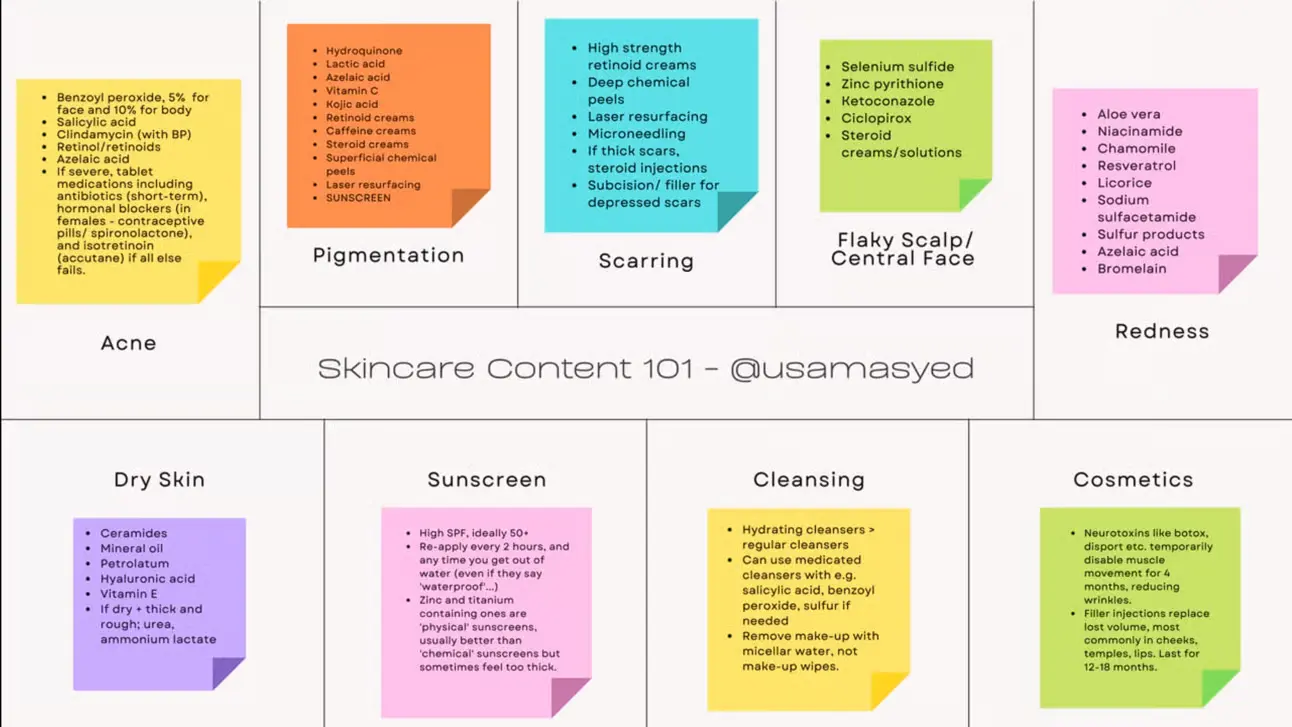 Reference from Dr. Usama Syed, dermatologist.
The Rules
Rule 1: Don’t spend more than Rs. 2,500 ($30) on a single product.
Rule 2: Products alone won’t fix everything. Drink water. Get 7-8 hours of sleep. Eat a balanced diet. Change your bed sheets, pillowcases, and towels regularly.
Find Your Skin Type
Before finding the products, find your skin type.
Knowing your skin type is key to choosing the right product. It will help you avoid one that could worsen your skin.
- Wash your face with water.
- Check after 1-2 hours:
- If Shiny, oily -> Oily skin
- If Dry, tight -> Dry skin
- If Shiny and tight in different areas -> Combination skin
Choosing The Right Product
🫧 Cleanser (Removes dirt and oil) (Optional)
You can use soap, face wash, or cleanser to remove dirt.
- Oily Skin: Get Foaming cleansers with salicylic Acid (start with low) niacinamide.
- Dry Skin: Get Non-foaming cleansers with hyaluronic acid, ceramides, glycerin, and aloe vera (not all)
- Combination/Normal Skin: Any Gentle cleanser
Product Recommendation:
- Cetaphil Face Wash for Dry to Normal Skin
- CeraVe Hydrating Cleanser for Normal to Dry Skin
- CeraVe Foaming Cleanser For Normal To Oily Skin
Retinoid (Start Low Concentration%) (Only at Night)
- Benefits: Anti-aging, Anti-pigmentation (dark spots) and acne, anti-skin cancer.
- Causes: dryness, irritation, skin peeling (at the beginning).
- Usage:
- Use a pea-sized amount for the whole face.
- Avoid the eye area and the folds between the nose and cheeks.
- Use every other night at beginning, Use at least for 4 to 8 weeks.
- Combine with moisturizer to reduce side effects.
Pro Tip: It’s difficult to get it without a prescription, so check a dermatologist.
For reference: Tretin 0.025% Cream
💧Moisturizer (Keeps your skin hydrated) (2 Times a day)
- Oily Skin: Salicylic Acid (start with low), Niacinamide, Hyaluronic Acid, Retinol (in the evening)
- Dry Skin: Hyaluronic Acid, Ceramides, Glycerin, Niacinamide, Shea Butter, Aloe Vera (not all)
- Combination/Normal Skin: Lactic Acid, Glycolic Acid, Salicylic Acid, Vitamin C, Hyaluronic Acid, Ceramides, and Vitamin B5.
Products Recommendation:
- CeraVe Moisturizing Cream for Dry To Very Dry Skin
- Dot & Key moisturizer for dry, normal Skin
- DermaCo Moisturizer Oil-Free
🌞 Sunscreen (A must-have)
- Why: It protects your skin from UV rays. It prevents aging and skin cancer.
- Fun fact: Clouds don’t stop UV rays, So use it every day.
- Avoid: Parabens, Ethanolamine, Phthalates, Polyethylene Glycol, Formaldehyde Releasers. and check the list below.
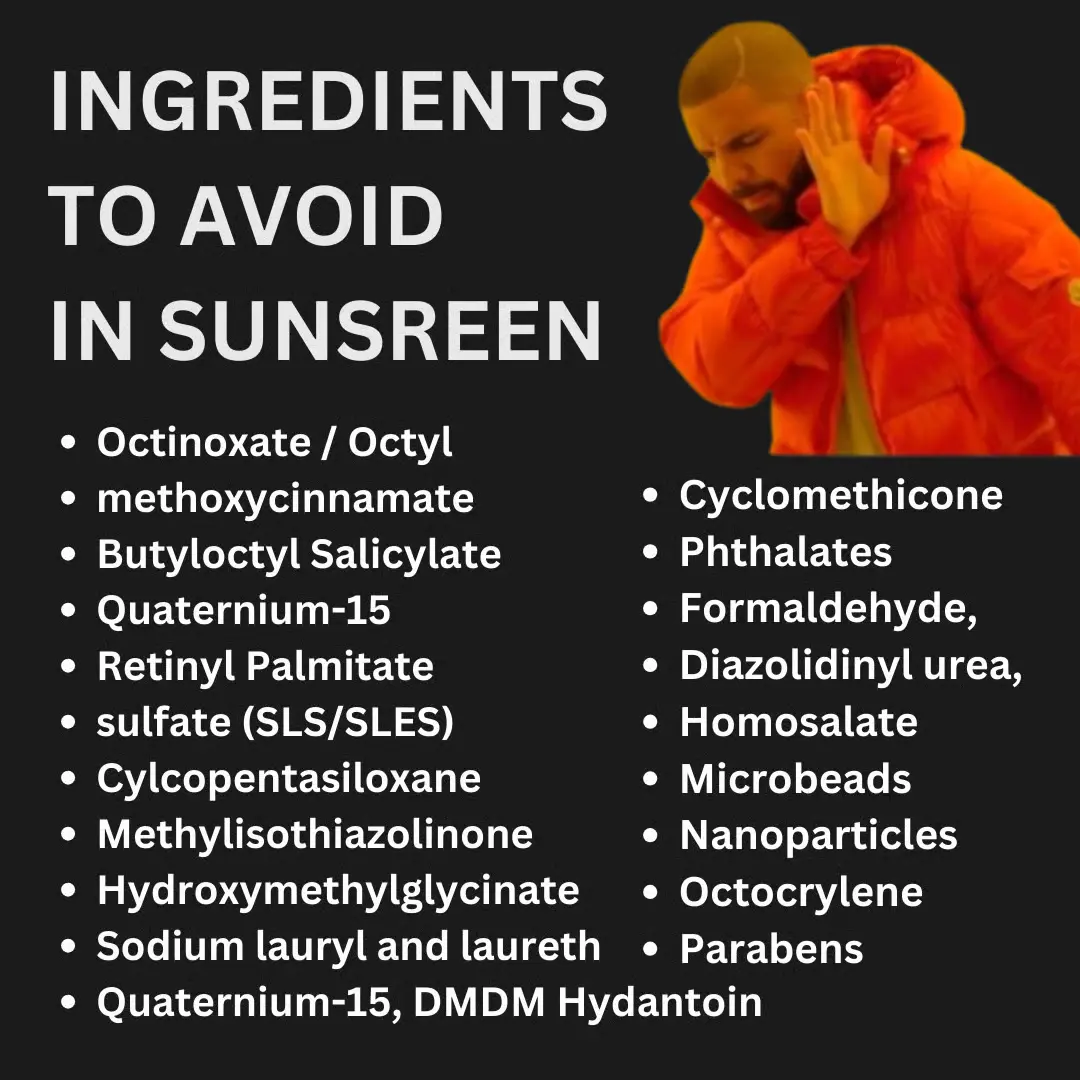 Ingredients to avoid in sunscreen.
Products Recommendation:
- WishCare SPF 50+ Invisible sunscreen
- WishCare SPF 50+ Sunscreen Body Lotion
- Foxtale Niacinamide sunscreen for Normal to oily skin
Avoid these ingredients:
- Parabens (isopropyl-, butyl-, isobutyl-)
- Ethanolamine (DEA, TEA, MEA)
- Phthalayes (DBP, DEHP, DEP)
- Polyethylene Glycol (PEG compounds)
- Formaldehyde Releasers (Quaternium, Diazolidinyl urea, DMD hydantoin)
🛒Shopping List:
🫧Cleanser:
- Cetaphil Face Wash for Dry to Normal Skin
- CeraVe Hydrating Cleanser for Normal to Dry Skin
- CeraVe Foaming Cleanser For Normal To Oily Skin
💧Moisturizer:
- CeraVe Moisturizing Cream for Dry To Very Dry Skin
- Dot & Key moisturizer for dry, normal Skin
- DermaCo Moisturizer Oil-Free
🌞Sunscreen:
- WishCare SPF 50+ Invisible sunscreen
- WishCare SPF 50+ Sunscreen Body Lotion
- Foxtale Niacinamide sunscreen for Normal to oily skin
Stick to the basics and start today; that will save both your skin and your wallet.
I’m not a dermatologist. Consult one before starting any skincare routine. Some links may be affiliate links.
Disclaimer: I’m not a certified professional. This is made for myself while learning and doing research — a super concise version most can follow. For a personal, safer version, always consult a medical professional and do your own research. Don’t just trust a random person on the internet, especially for medical or financial things.
Note: I wrote this for a single-edition newsletter I made a few years back called 20’s Playbook. I spent more than a week making this a near-perfect, long-lasting guide. It’s a first-principles approach — so unless you have a specific problem or something major changes medically, I feel this will stay accurate for the long term.